
Saab Gripen E — Operating Model and Combat Systems
Yours Magazine · 8 Jun 2026 · 5 min read
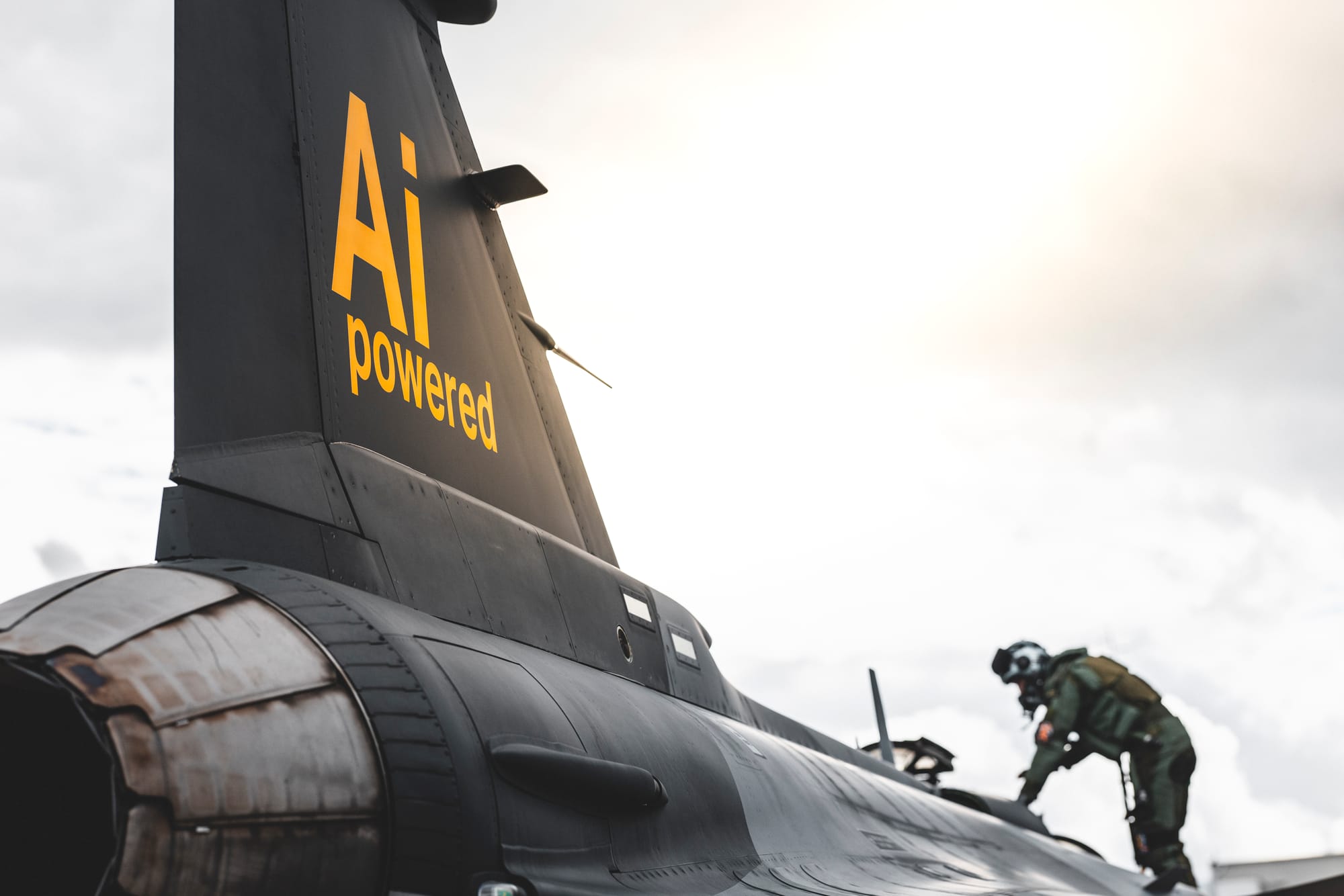
Ukraine recently announced its intent to acquire the Saab Gripen E as part of its long-term air force modernisation.
The aircraft is a single-engine fighter developed by Swedish manufacturer Saab, built around distributed operations, software adaptability and integrated sensing. This article looks at the operational concept behind the aircraft and the technical decisions built around it.
Distributed Operations and the BAS 90 Concept
The Gripen E's design traces back to a Cold War doctrine developed by Sweden, which shaped the aircraft's operating model. The Swedish military assumed that in a conflict, large air bases could become vulnerable to attack. Instead of concentrating fighter aircraft at a small number of permanent airfields, Sweden developed the BAS 90 system, which dispersed aircraft across several smaller operating locations. Reinforced sections of public roads were prepared so fighters could take off and land outside traditional air bases.
The Gripen was designed to function inside this system. The aircraft can operate from shorter runways, including road strips roughly 16 metres wide and around 500 metres long, and can land on roads of approximately 600 metres without requiring arresting hooks or brake chutes. After landing, it can be refuelled and rearmed in around 10 minutes. The turnaround is structured to be handled by a small ground crew, typically around five personnel.
This operating model defines how Gripen can be used in conflict. The aircraft’s software architecture follows a similar practical design logic.
Software Architecture and Upgrade Structure
Much of a modern fighter aircraft is shaped by software. When a new missile is introduced or radar behaviour is refined, those changes are implemented in the aircraft’s code.
In most aircraft, the software that controls flight and the software that manages radar and weapons form one integrated system. A change in one area can require updates across the entire package.
Gripen E was built with a different internal structure known as split avionics. The software that controls flight stability is separated from the software that manages radar, electronic warfare and weapons integration.
Because of that separation, updating a radar mode or integrating a new missile does not require changes to the flight-control layer. The aircraft’s flying characteristics remain the same, while the combat functions are updated.
This separation changes the upgrade cycle. Tactical software functions can be updated rapidly, in a matter of days or months rather than years. Because mission-system changes do not touch the flight-control layer, pilots keep the aircraft’s certified safety characteristics while gaining access to new capabilities as they are introduced.
Over the life of the platform, this structure also reduces the risk of the aircraft becoming locked into ageing technology. Updates can be introduced in smaller steps, avoiding large, infrequent mid-life upgrade programmes.
The same modular structure supports mission flexibility. Software “apps” can be added or replaced, and operators can influence the design process and introduce changes independently of the manufacturer.
Sensors, Data Fusion and Shared Awareness
Gripen E combines radar, infrared tracking, electronic sensing and secure data links into one integrated system. Information from these sources is processed together before it reaches the cockpit. The pilot does not work through separate sensor streams, but sees a single aligned view of the airspace.
Contacts detected by radar can be cross-checked against infrared signatures or electronic emissions. The system correlates this data internally into a single picture for the pilot.
The structure extends beyond one aircraft. Data gathered by a Gripen can be shared with other aircraft in formation and with ground or airborne command elements. A target detected by one platform can appear on the displays of others. Detection and engagement do not have to originate from the same aircraft.
This matters particularly in beyond-visual-range engagements. Modern air combat often occurs at distances where opposing pilots do not see each other directly. Engagement depends on sensor detection, tracking precision and missile performance rather than visual manoeuvre alone.
Artificial Intelligence and Decision Support
In this context, Saab partnered with the German defence technology company Helsing to test an artificial intelligence agent known as Centaur inside a Gripen E.
During a series of test flights conducted under Project Beyond, the system was integrated into the aircraft’s mission software. Centaur processed sensor data in real time, calculated intercept geometry and generated missile firing cues during simulated engagements. It also executed manoeuvres based on the evolving tactical picture.
A human pilot remained in the cockpit throughout and retained full authority to override the system. The objective was not autonomous flight, but accelerated data handling and tactical calculation in high-speed scenarios.
Because Gripen E separates mission software from flight-control software, such functions can be introduced and refined without modifying the aircraft’s core flying characteristics.
Airframe, Sustainment and Performance
Gripen E remains a single-engine, delta-wing fighter with canards, retaining the compact configuration of earlier variants. It is powered by the General Electric F414G engine, providing increased thrust compared to previous Gripen models.
The aircraft is smaller and lighter than most twin-engine European fighters. This affects fuel consumption, maintenance requirements and operating footprint. A single engine reduces mechanical complexity and simplifies sustainment compared to twin-engine platforms.
Internal fuel capacity was increased in the E version, extending range and time on station without external tanks. The aircraft can carry long-range air-to-air missiles such as Meteor, as well as air-to-ground munitions across multiple hardpoints.
Gripen E is not designed as a low-observable stealth aircraft in the fifth-generation sense. Instead of focusing primarily on radar-signature reduction, Saab structured much of the aircraft’s survivability concept around electronic warfare, sensor integration and networked operation.
Saab has argued that advances in radar systems and sensor networks reduce some of the traditional advantages associated with stealth alone. Gripen E therefore focuses on detecting, disrupting and complicating an opponent’s ability to track or engage the aircraft through electronic warfare, jamming and integrated sensing rather than relying mainly on stealth shaping.
Market Position and Expert Perspectives
Gripen E enters a global fighter market shaped by larger twin-engine platforms and fifth-generation stealth aircraft. Analysts have pointed to the aircraft's ease of maintenance, rapid turnaround capability and lower operating cost compared to heavier platforms as factors relevant to procurement decisions. The aircraft's compatibility with dispersed operating conditions and shorter runways aligns with air forces that do not rely exclusively on large, fixed installations.
Lieutenant Colonel Johan Huovinen of the Swedish Defence University has described Ukraine's deployment as a test of Swedish technology in the type of environment the aircraft was originally structured to address.
At the same time, defence analysts have identified clear trade-offs. Gripen E does not incorporate full fifth-generation stealth architecture and does not match the internal payload capacity of larger twin-engine fighters. Justin Bronk of the Royal United Services Institute has noted that the aircraft cannot by itself guarantee air superiority against a highly sophisticated opponent. Production scale has also been noted as a practical consideration, with Saab's ability to expand output becoming part of procurement planning as interest in the platform increases.
Ukraine's Ministry of Defence has framed its interest in practical terms. Oleksii Antoniuk, defence cooperation lead at the ministry, noted that Ukraine operates from dispersal airstrips, dirt runways, sections of highways and concealed positions — conditions the Gripen was designed to address.